
Functions in C
Functions in C are self-contained blocks of code designed to perform a specific task. Each function has a name, a return type, and a set of parameters (optional). Once defined, functions in C can be called multiple times from different parts of a program.
Each function in C has:
- A function name
- A return type
- Parameters (optional)
- A function body
Using functions in C makes programs modular and easy to understand.
Why Functions in C are Important
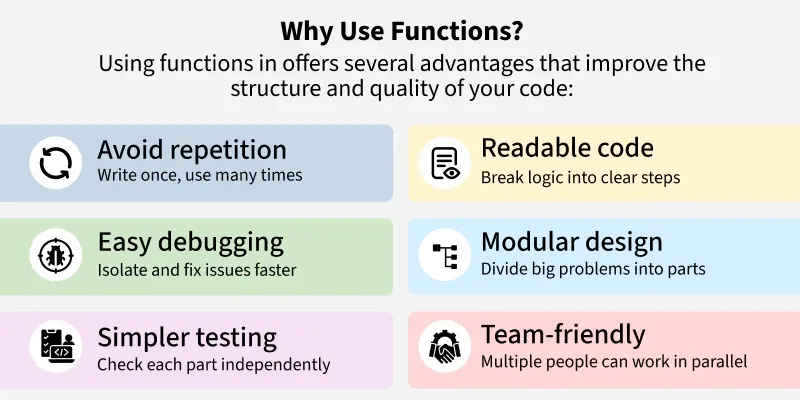
The importance of functions in C cannot be ignored. They help break down a large program into smaller units, making the code easier to develop, test, and maintain. With functions in C, multiple programmers can work on different parts of the same program efficiently.
Some key reasons why functions in C are important:
- Reduce code repetition
- Improve program readability
- Simplify debugging
- Enhance code reusability
Because of these advantages, functions in C are considered the backbone of structured programming.
Function Syntax
The function syntax in C defines how a function is declared, defined, and called in a C program. Understanding the function syntax in C is essential because it helps programmers write correct and well-structured programs using functions.
General Function Syntax in C
return_type function_name(parameter_list)
{
    // function body
    // statements
    return value;   // optional
}
Explanation of Function Syntax in C
- return_type
Specifies the type of value the function returns. It can beint,float,char,void, etc.
If a function does not return any value, the return type isvoid. - function_name
It is the name of the function. The name should be meaningful and follow identifier rules. - parameter_list
Parameters are variables that receive values from the calling function.
If there are no parameters, the list can be empty. - function body
The function body contains the statements that define what the function does. - return statement
Thereturnstatement sends a value back to the calling function.
It is optional forvoidfunctions.
Example of Function Syntax in C
#include <stdio.h>

int add(int a, int b)
{
    int sum;
    sum = a + b;
    return sum;
}

int main()
{
    int result;
    result = add(10, 20);
    printf("Sum = %d", result);
    return 0;
}
OUTPUT:
Sum = 30
Types of Functions in C
There are mainly two types of functions in C:
1. Library Functions in C
Library functions are predefined functions in C provided by standard libraries. Examples include printf(), scanf(), strlen(), and sqrt(). These functions in C save time and effort by providing ready-made solutions for common tasks.
2. User-Defined Functions in C
User-defined functions in C are created by the programmer according to program requirements. These functions allow custom logic implementation and make the program flexible and organized.
Both types of functions in C work together to build efficient applications.
Components of Functions in C
The working of functions in C involves three main components:
1. Function Declaration
A function declaration tells the compiler about the function name, return type, and parameters.
// function declaration
int add(int a, int b);
2. Function Definition
The function definition contains the actual code that performs the task.
int add(int a, int b) {
    return a + b;
}
3. Function Call
A function call is used to execute functions in C from another part of the program.
This structure ensures smooth execution and proper flow control in functions in C.